
The spread is one of the main Forex trading costs to consider when choosing a Forex broker. It is the difference between the bid and ask price, and even small differences can add up when you trade frequently.
But the lowest advertised spread does not always mean the lowest overall cost. Raw spread accounts often charge a separate commission, while standard accounts may include the broker’s markup in the spread.
In this guide, we compare 6 Forex brokers based on spreads, commissions, account types, platforms, and other costs to help you understand what each one offers.
What Are the Best Forex Brokers With Low Spreads?
The table below compares the lowest advertised EUR/USD spreads and the pricing structures attached to them. Spreads are variable, so a starting spread does not mean you will receive that price on every trade. Commission, account type, and trading conditions also affect the total cost.
| Broker | EUR/USD spread | Account type | Commission | Platforms | Best for |
| Taurex | From 0.0 pips | Raw | $3 per lot per side | MT4, MT5 | Low-spread trading |
| IC Markets | From 0.1 pips | Raw Spread | Around $3.50 per side | MT4, MT5, cTrader | Active traders |
| Pepperstone | From 0.0 pips | Razor | Around $3.50 per side | MT4, MT5, cTrader, TradingView | Low-cost trading |
| CMC Markets | From 0.0 pips on FX Active | FX Active/Standard | Commission on FX Active | Next Generation, MT4 | Flexible pricing |
| IG | From 0.6 pips | Standard | No commission on Standard | IG platform, MT4 | Multi-market trading |
| Capital.com | From 0.6 pips | Standard | No Forex commission | Proprietary, MT4, MT5, TradingView | Commission-free trading |
Spreads are variable and can change with market conditions, liquidity, trading hours, and news. Check each broker’s current pricing before opening an account.
1. Taurex: Low-spread Forex trading
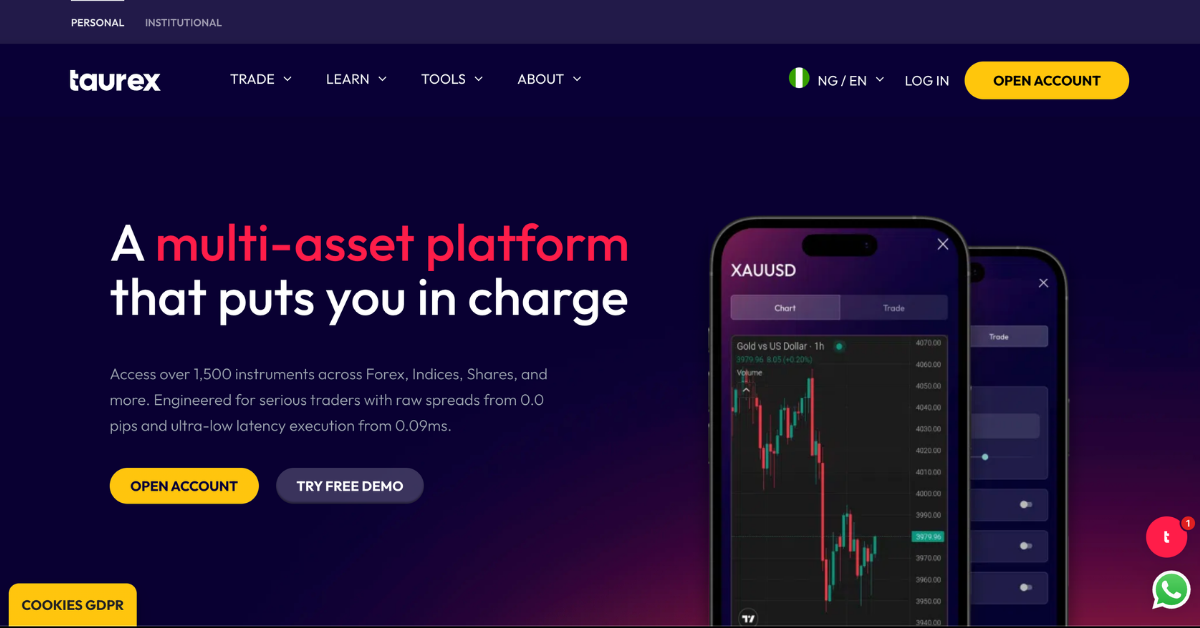
Taurex offers Standard Zero, Pro Zero, and Raw accounts with different pricing structures. The Raw account offers spreads from 0.0 pips and charges a commission of $3 per lot per side, while Standard Zero and Pro Zero use commission-free pricing with starting spreads of 1.4 and 1.0 pips, respectively.
The main difference is how you pay for the trade. A raw spread account can offer tighter spreads, but the commission needs to be included when comparing your total trading cost with a commission-free account.
Taurex offers access to 1,500+ CFDs through MT4 and MT5. Minimum deposits vary by account type: $0 for Standard Zero, $100 for Pro Zero, and $500 for Raw. Leverage and other trading conditions depend on the entity holding the account, so traders should check the applicable terms before opening an account. Taurex’s Global Regulations page outlines the entities and regulators across its offering.
If you are comparing Forex pricing, look beyond the headline spread. The account type, commission, execution conditions, and your trading frequency all affect what you actually pay.
Ready to compare the pricing for yourself? Open a Taurex demo account and test the trading conditions before committing real funds.
2. IC Markets: Best for raw spreads and active trading
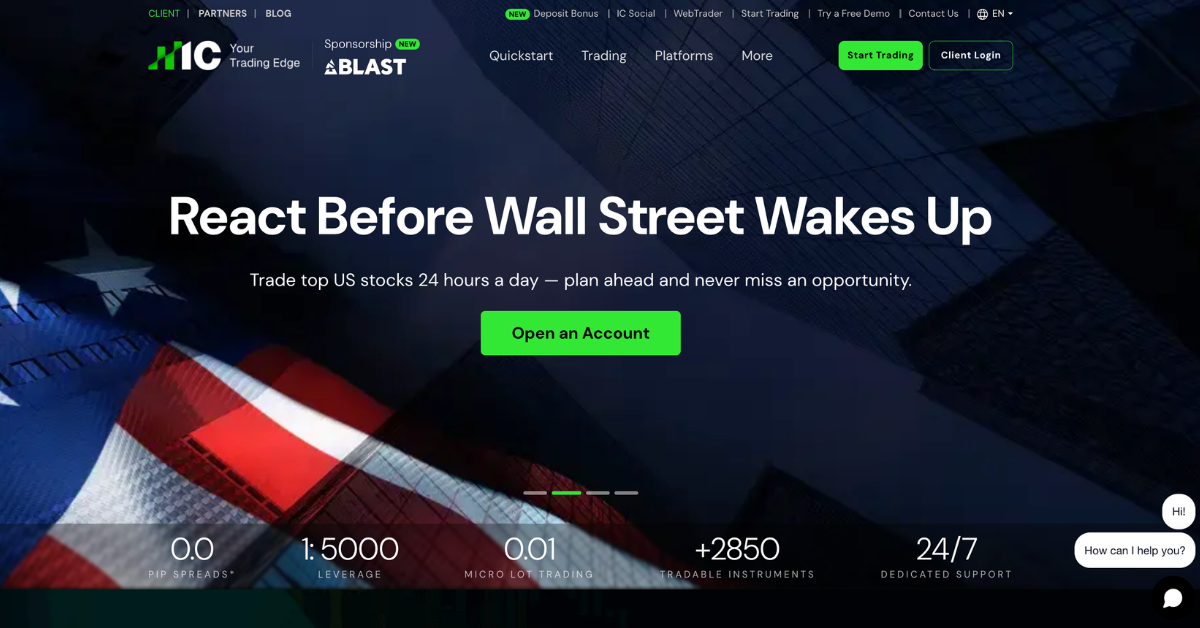
IC Markets’ Raw Spread account is aimed at traders who want tight spreads and are comfortable paying a separate commission. EUR/USD spreads can start from 0.0 pips, with commissions of $3.50 per side on MT4 and MT5, or $3.00 per side on cTrader. For a standard 1-lot trade, that means roughly $7 or $6 in round-turn commission before the spread is included.
The Standard account does not charge a separate commission, but the spread is wider, with a markup of around 0.8 pips over the raw price. This can make the Raw Spread account more relevant to frequent traders, while traders who place fewer trades may prefer the simpler commission-free structure.
IC Markets supports MT4, MT5 and cTrader, and requires a $200 minimum deposit. The broker also operates through different regulated entities, so available leverage, protections and account conditions depend on where your account is registered.
3. Pepperstone: Best for low-cost Forex trading
Pepperstone’s Razor account offers raw spreads from 0.0 pips and charges a commission of around $3.50 per side. The Standard account has no separate Forex commission, but spreads are wider and start at around 1.0 pip. This gives traders a choice between tighter spreads with a commission and wider spreads with the trading cost built into the spread.
The commission can also vary depending on your account currency. For example, it is around £2.25 per side for GBP accounts and €2.60 for EUR accounts. When comparing accounts, it is therefore worth looking at the total cost of a complete trade rather than comparing the spread alone.
Pepperstone supports MT4, MT5, cTrader and TradingView. It is regulated by authorities including the FCA, ASIC, BaFin and CySEC, although the available entity, protections and trading conditions depend on your location. Swap-free accounts are available in eligible regions, but these accounts can have administration fees for positions held beyond a specified period.
4. CMC Markets: Best for flexible pricing
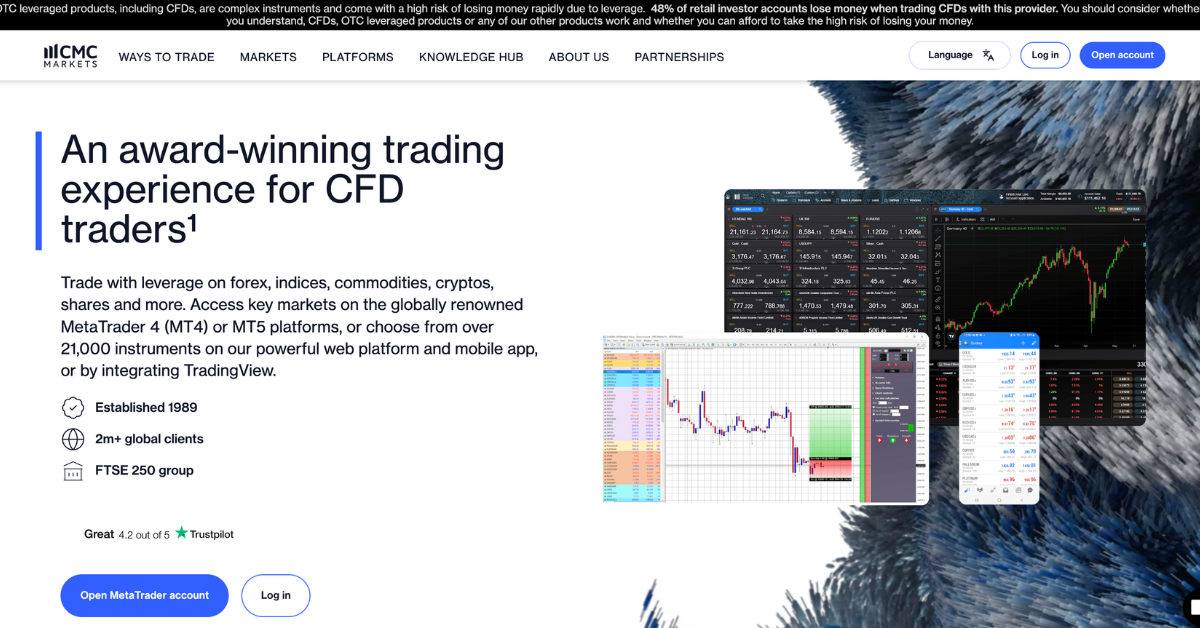
CMC Markets offers both commission-based and spread-based Forex pricing. Its FX Active account has minimum spreads of 0.0 pips on six major pairs, including EUR/USD, GBP/USD and USD/JPY. The account adds a separate commission, so the 0.0-pip starting spread should not be treated as the total trading cost.
The Standard account does not charge a separate Forex commission, but spreads are wider. This gives traders a straightforward choice between a commission-based account with tighter spreads and a standard account where the cost is built into the spread.
CMC offers its Next Generation platform as well as MT4, while MT5 availability can depend on the market and account offering. Before choosing an account, check the pricing that applies to your location and the currency you will use for trading.
5. IG: Best for low spreads across a wide range of markets
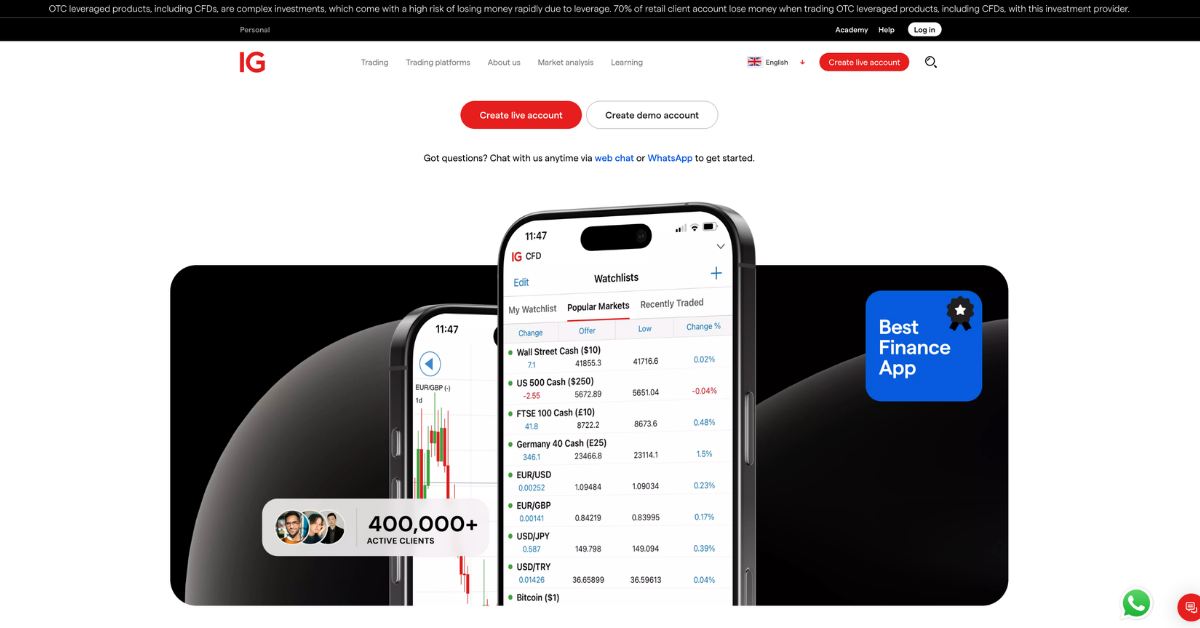
IG’s Standard account uses spread-only pricing, with EUR/USD spreads from around 0.6 pips. Some 2026 comparisons put the published average closer to 0.86 pips, so traders should not assume the minimum spread will be available on every trade.
For higher-volume traders, IG also offers Forex Direct, which provides direct market pricing with a separate commission. Independent testing recorded an average EUR/USD spread of around 0.16 pips, although the commission was higher than the industry average in the same comparison. This means Forex Direct can offer tighter spreads, but the commission needs to be included when calculating the total cost per trade.
IG offers MT4 and FIX API connections alongside its own trading platform and provides access to a wide range of markets, including Forex, shares, indices, commodities and options. The broker operates through multiple regulated entities, so available products, fees and protections can vary by location.
6. Capital.com: Best for commission-free low-spread trading
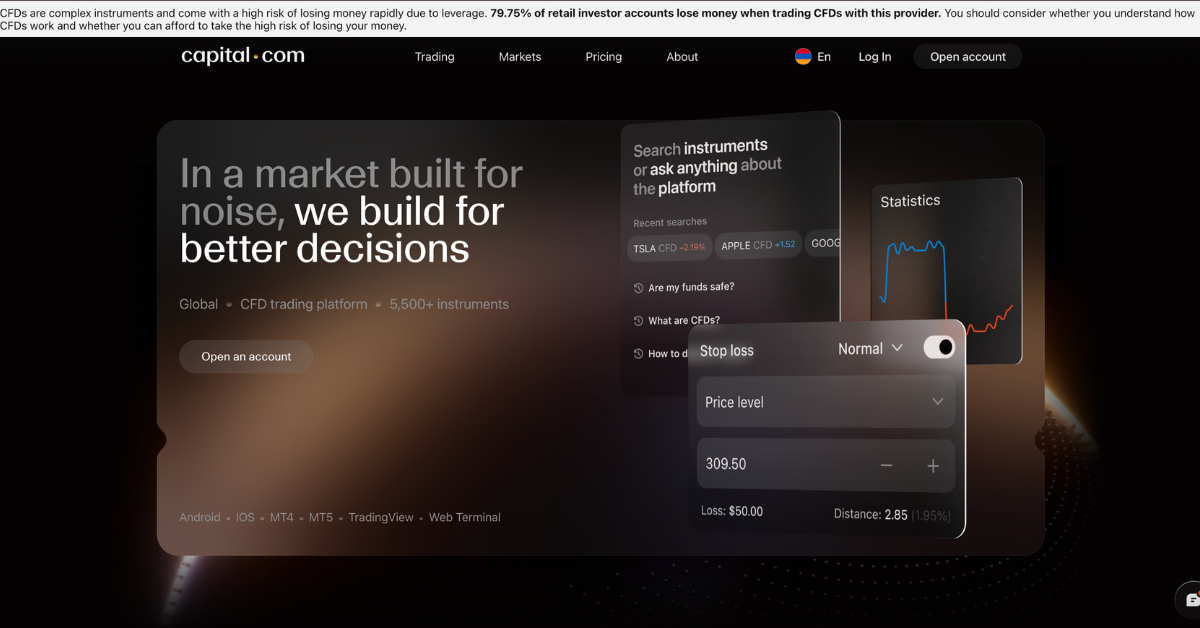
Capital.com uses a commission-free pricing model for Forex, with EUR/USD spreads starting from 0.6 pips. Independent testing has put the average around 0.6 to 0.7 pips, although actual spreads can vary with market conditions.
Because there is no separate Forex commission, the spread is the main trading cost to compare. This can make the pricing easier to calculate, particularly for traders who prefer not to account for a separate per-lot commission on each trade.
Capital.com offers its own platform as well as MT4, MT5 and TradingView. Its platform also supports guaranteed stop-loss orders, although these may come with an additional cost. The broker operates through several regulated entities, including those overseen by the FCA, CySEC, ASIC, the UAE’s SCA and the Bahamas’ SCB. Available protections and trading conditions depend on the entity serving your account, so check the current terms before depositing funds.
How to Choose a Forex Broker With Low Spreads in 2026
The table is a useful starting point, but the right broker depends on how you trade. Focus on these factors when comparing costs:
- Compare average spreads, not minimum spreads
A “from 0.0 pips” spread is the broker’s minimum, not what you will pay on every trade. Check average spreads for the pairs and trading sessions you actually use. - Consider commission fees
For raw accounts, compare the spread and commission together. On EUR/USD, a 0.1-pip spread plus a $7 round-turn commission costs about $8 per standard lot, while a 0.6-pip commission-free spread costs about $6. - Check regulation and security
Check the legal entity holding your account, its regulator, and the protections that apply. Taurex explains its fund segregation and $1 million insurance coverage on its safety of funds page. You can also learn how to spot Forex scams and verify a broker’s licence before opening an account. - Match the broker to your trading style
Scalpers may prefer raw accounts with tighter spreads, while occasional traders may prefer simpler spread-only pricing. Also compare platforms, execution conditions and overnight costs, and use the types of Forex brokers to understand the differences.
How Do Low-Spread Forex Brokers Compare?
A low advertised spread does not tell you the full cost of trading. These factors help you compare what you are likely to pay under different trading conditions.
Minimum vs average Forex spreads
Minimum spreads show the best price a broker can offer, usually during highly liquid periods such as the London and New York session overlap. Average spreads are more useful for estimating everyday costs, especially if you trade outside peak hours. Check both figures for the currency pairs you trade most often.
Standard accounts vs raw spread accounts
Standard accounts include the broker’s markup in the spread, while raw spread accounts offer tighter pricing and charge a separate commission. A raw account can suit frequent traders, but calculate the spread plus commission before assuming it is cheaper. Knowing how to read Forex quotes can help you see the difference in your trading platform.
Spread-only pricing vs commission-based pricing
Spread-only pricing is easier to calculate because there is no separate trading commission. Commission-based pricing can reduce the spread but adds a fixed cost to each trade, so it may make a bigger difference when you trade larger positions or enter and exit frequently.
EUR/USD spreads compared with other major pairs
EUR/USD generally offers some of the tightest spreads because it is the most traded currency pair. AUD/USD, GBP/USD and USD/JPY can have slightly wider spreads, while pairs such as GBP/JPY can cost more to enter and exit. If you mainly trade one pair, compare brokers using that pair rather than EUR/USD alone.
Fixed vs variable Forex spreads
All six brokers in this comparison use variable spreads, which can widen during news releases, low liquidity and volatile markets. Fixed spreads provide more predictable costs but are generally wider, so traders should compare the typical spread against the conditions they actually trade in.
All-in trading costs
The spread is only one part of your trading cost. Include commissions, swap or overnight financing and any other account fees, especially if you hold positions for several days or weeks.
Are Low-Spread Forex Brokers Better for Every Trader?
Low spreads can matter more for some trading styles than others. Trade frequency, position size and holding time all affect how much trading costs matter.
- Low spreads for scalpers
Scalpers often target small price movements, so even a 1-pip spread can take a meaningful share of the potential profit. Tight spreads can reduce the cost of frequent entries and exits. - Low spreads for day traders
Day traders may place several trades in a session, so small differences in spread can add up. The effect becomes greater when trading larger positions. - Low spreads for high-volume traders
When you trade large volumes, small differences in the cost per lot can quickly add up. Compare the spread and commission together rather than focusing on either one alone. - Low spreads for swing traders
Swing traders hold positions for days or longer, so the opening spread is usually less significant than it is for scalpers. Swap and overnight financing costs can become more important. - When commission-based accounts can make sense
Raw accounts can suit frequent traders, larger positions and automated strategies because they offer tighter spreads with a separate commission. If you use a Forex trading robot, consistent spreads can also help keep live trading costs closer to your testing conditions. - When a standard spread account may be simpler
Standard accounts include the broker’s fee in the spread, making the pricing easier to understand. If you are learning how to become a trader, this can make it easier to track your trading co
How Can You Find a Forex Broker With the Lowest Trading Costs?
Follow these steps to compare actual trading costs rather than headline figures.
- Compare average spreads, not advertised minimums. Minimum spreads show the best possible price. Use average spread data, preferably from independent testing, to estimate what you may actually pay.
- Calculate the spread plus commission. Convert both costs into dollars per standard lot so you can compare raw and standard accounts on the same basis.
- Compare the same currency pair. EUR/USD is a useful benchmark because it is widely traded and available across most brokers. If you mainly trade another pair, compare that pair as well.
- Check spreads under different market conditions. Spreads can widen sharply around major economic releases, such as Non-Farm Payrolls. Short-term traders may also want to understand how different Forex orders behave when markets move quickly.
- Compare account types. The same broker can offer very different spreads and commissions across its account tiers. Calculate the total cost for the account that matches your trading volume and frequency.
- Check the pricing available in your country. Your regulatory entity can affect the accounts, leverage and trading conditions available to you. Check these details before you open a Forex trading account.
FAQ
Which Forex broker has the lowest spreads?
No broker has the lowest spread on every pair and at every time. Compare average spreads for the currency pairs and trading hours you actually use.
What is considered a low Forex spread?
For EUR/USD, a spread below 0.5 pips is generally competitive on a commission-free account. Raw accounts can offer spreads below 0.2 pips, but they charge a separate commission.
Are 0.0-pip spreads really free?
No. A 0.0-pip figure is normally a minimum spread, not a guaranteed price. Raw accounts also charge a commission on trades.
Are raw spread accounts cheaper than standard accounts?
They can be, particularly for frequent traders, but it depends on the commission and average spread. Calculate the total cost per trade before choosing an account.
Do Forex spreads change during the day?
Yes. Liquidity is usually higher during major session overlaps, while spreads can widen during quieter periods and around market events.
Which Forex pairs usually have the lowest spreads?
EUR/USD generally has the tightest spreads, followed by other heavily traded majors such as USD/JPY, GBP/USD and AUD/USD. Exotic pairs typically have wider spreads.
Are low spreads important for scalping?
Yes. When targets are only a few pips, the spread can represent a significant part of the potential return. Scalpers should also consider commission and execution speed.
How do I calculate the total cost of a Forex trade?
For a basic estimate, multiply the spread by your position’s pip value and add the round-turn commission. Include swap or financing costs if you hold the position overnight.
Do low-spread Forex brokers charge commissions?
Usually on their raw or tightest-spread accounts. Standard accounts often remove the separate commission by building the broker’s fee into the spread.
Can Forex spreads increase during news events?
Yes. Major releases such as central bank decisions and employment reports can cause spreads to widen as liquidity changes. This can increase the cost of entering or exiting a position.
Does the lowest spread mean the lowest trading cost?
No. Compare the spread, commission, overnight financing and any other applicable fees together. Your trading frequency and position size also affect the final cost.