Choosing a Forex broker involves more than comparing spreads, platforms and currency pairs. Traders also need to know who oversees the company and what rules it must follow when handling client money. That is where the difference between regulated vs unregulated Forex brokers matters most.
A regulated broker answers to a financial authority. An unregulated one answers only to itself. This guide explains what a regulated broker is, the risks of unregulated Forex brokers, whether they are legal, and how to verify a broker’s status before depositing funds.
What Is a Regulated Forex Broker?
A regulated Forex broker is a company licensed and supervised by a financial regulator to provide Forex trading services in the countries or regions where it operates. The broker must meet specific requirements to obtain and maintain its licence, including rules on capital, client funds, financial reporting, and business conduct.
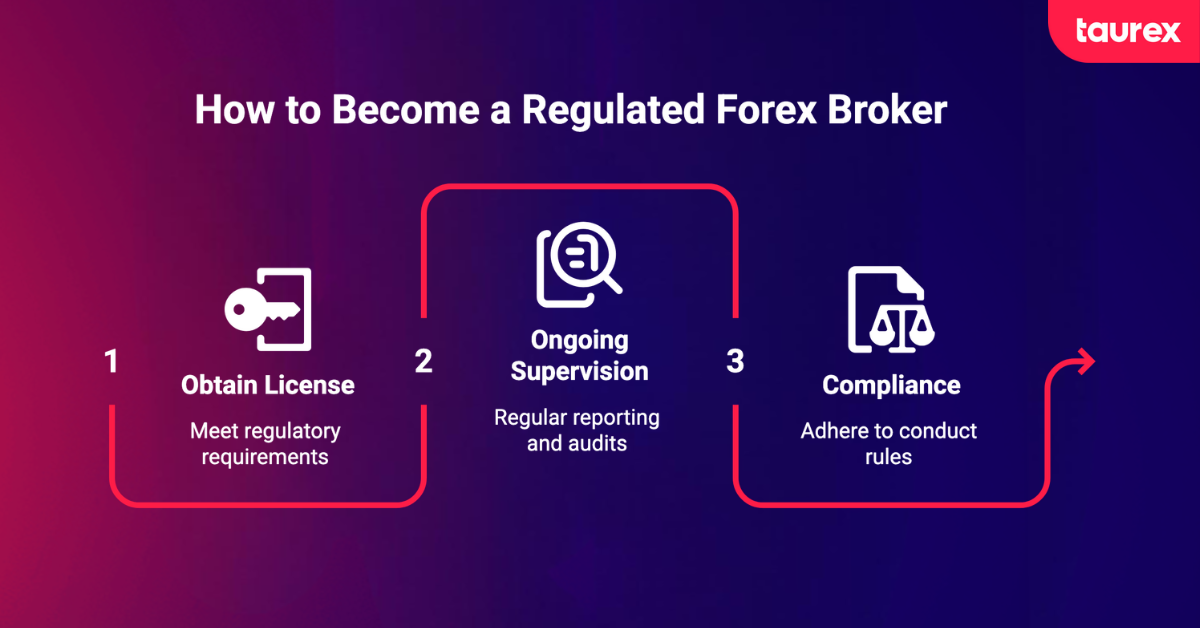
Regulation also means the broker remains subject to ongoing supervision. Depending on the regulator, this can include regular reporting, audits, risk disclosures, conduct requirements, and enforcement action if the firm breaks the rules.
The exact protections vary by jurisdiction, so checking which regulator supervises a broker is just as important as checking whether it is regulated.
What Are the Major Forex Regulators?
Several financial authorities oversee Forex and CFD brokers in different markets:
- FCA (United Kingdom): Regulates financial firms serving UK clients and sets requirements covering conduct, capital, client funds, and consumer protection.
- ASIC (Australia): Licenses and supervises financial services firms, including Forex and CFD providers, with rules covering conduct, leverage, and risk management.
- CySEC (Cyprus/EU): Regulates investment firms in Cyprus under the EU’s MiFID framework. Firms authorised under this framework may provide services across other EU and EEA markets subject to the applicable rules.
- CFTC and NFA (United States): Oversee the US retail Forex market, with registration and capital requirements applying to firms that offer retail Forex trading.
- FSCA (South Africa): Regulates financial services providers in South Africa, including firms offering derivatives and Forex-related products.
- IIROC (Canada): IIROC was replaced by the Canadian Investment Regulatory Organization (CIRO) in 2023. CIRO oversees investment dealers and trading activity in Canada, including requirements relevant to retail Forex trading.
- Offshore regulators: Authorities such as the Financial Services Authority of Seychelles and the Financial Services Commission of Mauritius also license financial firms. Their rules and investor protections can differ from those offered by regulators in major financial markets.
Taurex operates through regulated entities in multiple jurisdictions, including Taurex Global Limited, which is regulated by the Financial Services Authority of Seychelles (FSA) under licence SD092.
What Is an Unregulated Forex Broker?
An unregulated Forex broker operates without a licence or supervision from a financial regulator. This means it is not subject to the regulatory requirements that apply to licensed brokers, such as rules on capital, client funds, financial reporting, and business conduct.
It is also important to distinguish a financial licence from a basic business registration. A company may be legally registered with a government authority without being authorised to provide Forex trading or investment services. A business registration alone does not confirm that a firm is licensed to handle client funds or offer regulated financial products.
Are unregulated brokers illegal?
Not necessarily. A broker may be legally incorporated in one country but lack the authorisation required to offer financial services in another. Whether an unregulated broker can legally serve traders depends on the laws of the country where its clients reside.
In many major jurisdictions, providing regulated financial services without the required authorisation is unlawful:
- United Kingdom: Carrying out regulated investment activities without the required Financial Conduct Authority (FCA) authorisation can constitute a criminal offence.
- United States: Firms offering retail Forex trading to US residents generally must register with the Commodity Futures Trading Commission (CFTC) and meet applicable National Futures Association (NFA) requirements.
- European Union: Brokers generally need authorisation from an EU financial regulator or appropriate permission to provide regulated investment services to retail clients.
- Australia: Firms providing regulated financial services generally need an Australian Financial Services (AFS) licence or a valid exemption.
In most cases, traders are not committing an offence simply by using an unregulated broker. However, they may lack regulatory protections, compensation arrangements, and formal complaint procedures. Recovering funds from a broker operating in another jurisdiction can also be difficult.
Before opening an account, traders should check the broker’s regulatory status, the legal entity providing the service, and whether it is authorised to serve clients in their country.
8 Key Differences Between Regulated vs Unregulated Forex Brokers
The main difference comes down to the level of oversight and protection available to traders. Regulated brokers must follow rules set by their financial authority, while unregulated brokers do not face the same requirements.
| Factor | Regulated broker | Unregulated broker |
| Oversight | Supervised by a financial regulator | No financial regulator supervising the firm |
| Client funds | Segregation may be required by the regulator | No equivalent regulatory requirement |
| Leverage | Subject to regulatory limits in some jurisdictions | May offer much higher leverage |
| Negative balance protection | May be required for retail clients | Not guaranteed |
| Compensation | May be available depending on jurisdiction and eligibility | Usually no regulatory compensation scheme |
| Transparency | Subject to regulatory disclosure requirements | Requirements may be limited |
| Complaints | Formal process and possible external escalation | Depends on the firm’s own procedures |
| Trading conditions | Products and promotions may be restricted | Fewer regulatory restrictions |
How Do Regulated Forex Brokers Protect Traders?
Regulated Forex brokers must follow rules designed to protect client funds and limit certain risks. The exact protections depend on the regulator and the jurisdiction where your account is held.
Common protections can include:
- Segregated client funds: Client money must be kept separate from the broker’s operating funds under applicable regulations.
- Negative balance protection: Some regulators require brokers to prevent retail clients from losing more than the funds in their trading account.
- Margin close-out rules: Certain regulators require positions to be closed when an account’s equity falls below a specified margin level, which can limit how far Forex drawdown can affect your account before positions are automatically reduced.
- Compensation schemes: Some jurisdictions provide compensation if a regulated firm fails and cannot return eligible client funds. For example, the UK’s Financial Services Compensation Scheme (FSCS) and Cyprus’ Investor Compensation Fund (ICF) provide protection subject to their respective rules and limits.
These protections generally do not cover normal trading losses. Before opening an account, check which regulatory entity will hold your account and which protections apply to you.
What Are the Risks of Using an Unregulated Forex Broker?
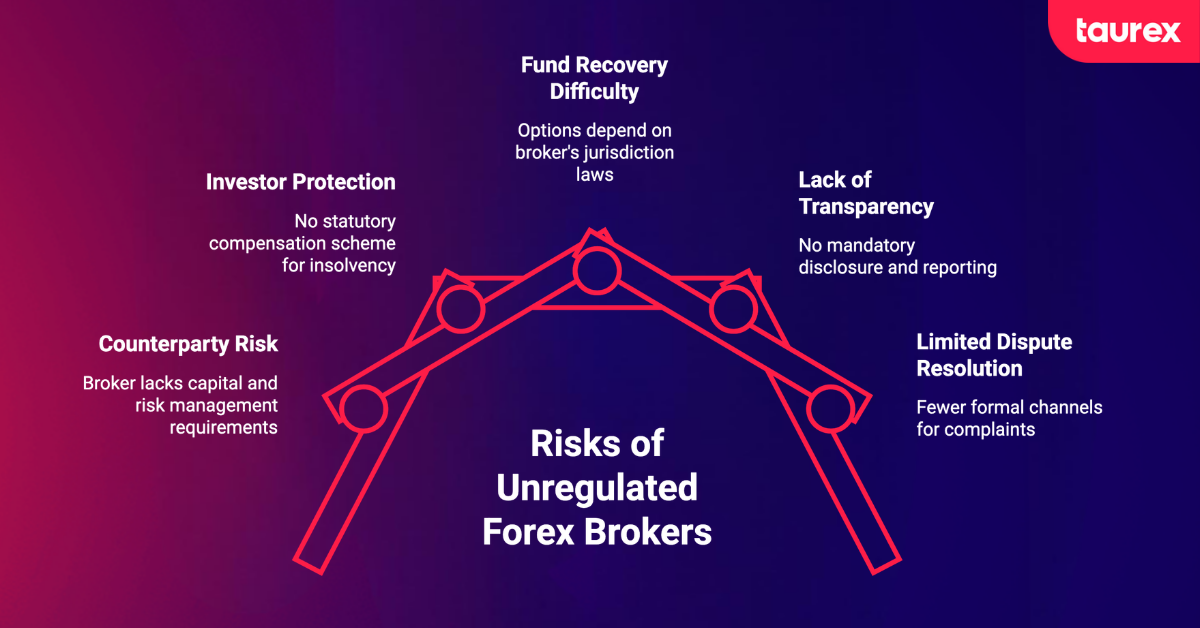
Trading with an unregulated Forex broker can leave you with fewer protections if something goes wrong. The main risks include:
- Greater counterparty risk: The broker is not subject to the same capital and risk management requirements that apply to regulated firms.
- Limited investor protection: You may not have access to a statutory compensation scheme if the broker becomes insolvent.
- Difficulty recovering funds: If a dispute arises, your options may depend on the laws and courts in the jurisdiction where the broker is based.
- Less transparency: An unregulated broker may not have to follow the same disclosure and reporting requirements as a regulated firm.
- Limited dispute resolution: You may have fewer formal channels for escalating a complaint or challenging a decision.
Not every unregulated broker acts improperly, but traders have little recourse if one does.
Red flags to watch for
- Promises of guaranteed or unusually high returns.
- Vague claims such as “internationally regulated” or “globally licensed” without a licence number.
- Pressure from account managers to make larger deposits.
- Withdrawal obstacles, including unexpected fees, bonus conditions, or repeated verification requests.
- Deposits accepted only through difficult-to-trace payment methods.
- Unsolicited contact through social media, messaging apps, or cold calls.
How Can You Check if a Forex Broker Is Regulated?
You should verify a broker’s regulatory status independently rather than relying only on information published on its website.
- Find the regulatory details. Check the broker’s website, legal documents, or regulatory information page for its legal entity, regulator, and licence number.
- Check the official register. Search the regulator’s own database and confirm that the broker’s legal entity and licence details match. Depending on the jurisdiction, this could include the FCA Financial Services Register, CySEC register, ASIC registers, or the NFA’s BASIC database.
- Check the website and domain. Make sure the website you plan to use matches the website or contact details listed by the regulator. Clone websites can be used to impersonate authorised firms.
- Review regulatory warnings. Check whether the regulator has published warnings, restrictions, suspensions, or enforcement actions involving the firm.
- Be cautious with vague claims. Statements such as “internationally regulated” or “globally licensed” are not enough. Look for a specific legal entity, regulator, and licence number that you can verify independently.
Why Does Forex Broker Regulation Differ by Country?
Forex regulation differs between countries because each jurisdiction sets its own rules for financial firms and retail trading. The main reasons include:
- Different regulatory standards: Financial authorities set their own requirements for leverage, client funds, capital, reporting, marketing, and investor protection.
- Different approaches to retail trading: Some regulators impose tighter restrictions on Forex and CFD trading, while others allow higher leverage or provide different levels of investor protection.
- Different licensing requirements: The requirements for obtaining and maintaining a Forex licence vary between jurisdictions, including capital, reporting, and compliance obligations.
- Multiple broker entities: International brokers may operate through separate legal entities in different countries. The entity serving your account determines which regulator’s rules apply.
- Different client protections: Compensation schemes, negative balance protection, and dispute resolution options can vary depending on the jurisdiction and regulatory entity.
What Should You Check Before Choosing a Forex Broker?
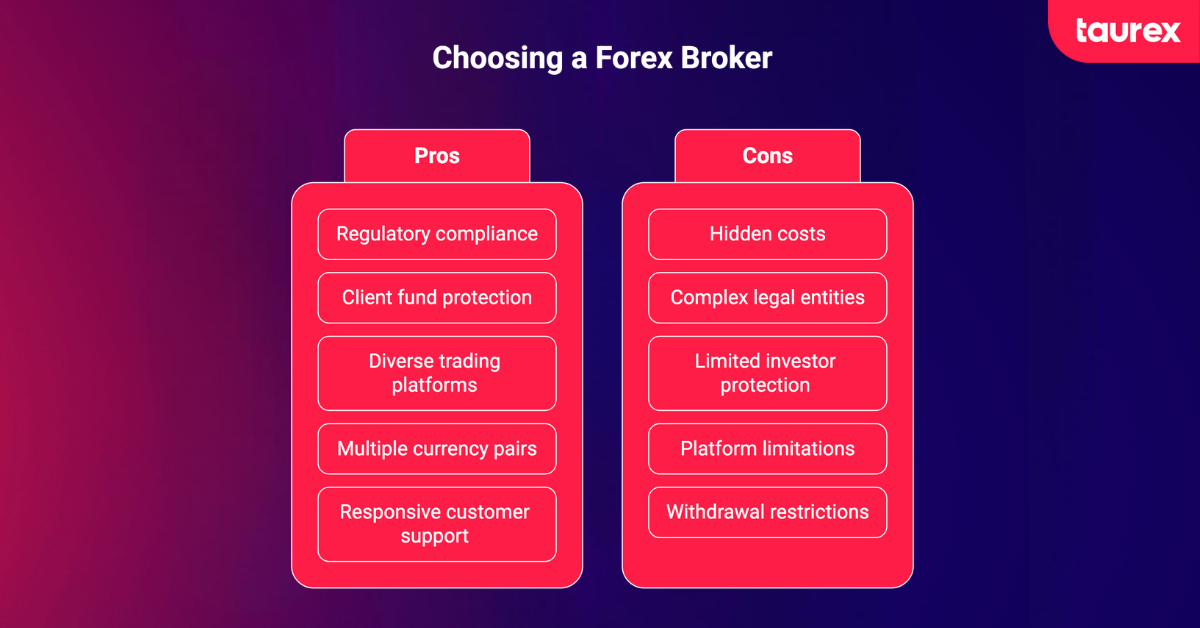
Regulation is an important starting point, but it does not tell you everything about choosing a Forex broker. Before opening a Forex trading account, check the legal entity you will trade with, the protections that apply to your account, the actual trading costs, and how easy it is to deposit and withdraw funds.
Regulatory status and licence
Find the broker’s legal name, regulator, and licence number, then verify them on the regulator’s official register. Make sure the licence covers the financial services the broker is offering. A company can be registered as a business without being authorised to provide Forex or CFD services.
Legal entity and jurisdiction
Large broker groups may operate through different companies in different countries. Those entities can have different regulators, leverage limits, client protections, and complaint procedures. Check the account-opening documents to see which legal entity you will contract with rather than relying on the brand name alone.
Client fund arrangements
Check whether the applicable regulator requires client money to be held separately from the broker’s operating funds and how those arrangements work. Also check whether an investor compensation scheme applies to your account, as eligibility and coverage vary by jurisdiction.
Trading costs and conditions
Do not compare brokers using the advertised Forex spread alone. Check spreads, commissions, overnight swap charges, minimum trade sizes, margin requirements, and other Forex trading fees. It is also worth checking if the quoted spread is fixed or variable and if trading conditions differ between account types.
Available platforms and markets
Choose a platform that supports the way you plan to trade. MT4 and MT5 are widely used for Forex and CFD trading, while proprietary apps may offer a simpler mobile experience. Check the available order types, charting tools, indicators, automated trading support, and mobile access.
Traders using indicator-based approaches such as a divergence trading strategy need strong charting capabilities. The same applies to pattern-based setups such as the Forex blow off pattern. Session-based methods such as an opening range breakout, price gap trading strategies, or Forex news trading strategies also require reliable real-time data and fast order execution.
You should also confirm that the broker offers the currency pairs and other instruments you actually want to trade.
Deposit and withdrawal terms
Review the available payment methods, processing times, fees, minimum amounts, and any withdrawal requirements before funding an account. Pay particular attention to whether withdrawals must be made through the same payment method used for deposits and whether additional verification is required.
Customer support and complaints process
Check how the broker handles customer complaints and how you can escalate an issue if the initial response does not resolve it. Regulated brokers generally have formal complaints procedures, but the available external escalation options depend on the regulator and jurisdiction. Testing customer support before depositing can also give you an idea of how easy it is to get help when you need it.
How Taurex Approaches Regulation and Client Protection
Our approach to regulation is reflected in the information and protections we make available to clients. We provide details about fund safety, account conditions, trading costs, and the legal terms that apply to our services.
When you open an account, you can review the applicable terms and understand which protections apply to you. This includes information about client funds, leverage, negative balance protection, and other trading conditions.
We also provide account and risk information before you start trading. Reviewing these details alongside our regulatory information can help you understand the conditions that apply to your account before depositing funds.
For more information, see our safety of funds page and explore our Forex offering before opening an account.
Ready to practise? Open a Taurex demo account and explore Forex trading without risking real capital.
FAQ
Can an unregulated Forex broker be legitimate?
Yes. A broker can operate without financial regulation without necessarily being fraudulent. However, an unregulated broker does not provide the same regulatory oversight and protections as a licensed broker.
Can a regulated Forex broker still lose my money?
Yes. Regulation does not protect you from normal trading losses. It sets rules for how the broker operates and may provide certain protections for client funds and other risks.
How can I verify a Forex broker’s licence?
Find the broker’s legal entity and licence number, then search for them on the relevant regulator’s official register. Check that the registered company details and website match the broker you plan to use.
Can a Forex broker be regulated in more than one country?
Yes. International broker groups can operate through separate legal entities in different jurisdictions. The regulator and protections that apply to you depend on the entity providing your account.
Does regulation affect Forex leverage?
Yes. Some regulators impose leverage limits on retail Forex and CFD trading. For example, EU and UK rules generally limit retail CFD leverage to 30:1 for major currency pairs. Other jurisdictions have different limits.
What happens if a regulated Forex broker goes bankrupt?
Client funds held in accordance with applicable segregation rules may receive protection from the broker’s own assets. Some jurisdictions also have compensation schemes for eligible clients if a regulated firm fails. Coverage and limits vary by country and regulatory entity.
Is an offshore Forex broker always unregulated?
No. Some offshore jurisdictions have financial regulators that issue licences to Forex brokers. However, the rules and client protections can differ from those in jurisdictions with stricter retail trading requirements.
Why do some traders choose unregulated brokers?
Some unregulated brokers may offer higher leverage, lower Forex trading minimum deposit requirements, or products and promotions that are restricted in more tightly regulated markets. These conditions can also come with fewer regulatory protections.
Does regulation guarantee that a Forex broker is trustworthy?
No. Regulation provides oversight and establishes rules for the broker, but it does not eliminate all risks. Check the broker’s regulatory status, legal entity, trading conditions, and any available enforcement history before opening an account.
Should beginners avoid unregulated Forex brokers?
Beginners should understand the protections they may give up when using an unregulated broker. Comparing regulated and unregulated Forex brokers, and understanding the types of Forex brokers, can help you assess the risks before depositing funds.